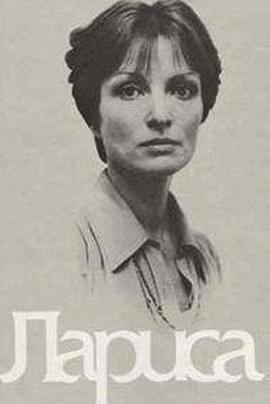
《拉莉萨》是一部由依莱姆·克里莫夫导演的剧情片,影片风格独特,叙事细腻,演员表现出色,剧情引人入胜,是一部非常值得观看的电影。克里莫夫采用了一种富有诗意的拍摄手法,营造出一种浪漫而梦幻的氛围。 最后,影片的剧情紧凑,情节跌宕起伏,让人一直保持着高度的兴趣和关注。导演依莱姆·克里莫夫巧妙地将现实与幻想相结合,营造出一种神秘而梦幻的氛围。 推荐人群:喜欢观看家庭情感剧、社会现实题材影片的观众。这部作品以独特的叙事风格和出色的演员表现,成为了一部不可错过的电影。
A loving film tribute to Russian filmmaker Larisa Shepitko, who died tragically in a car accident in 1979 at the age of 40. This documentary by her husband, Elem Klimov, includes excerpts from all of Shepitko's films, and her own voice is heard talking about her life and art. Elem Klimov's grief-stricken elegy Larisa examines the life of his late wife—the film director Larisa Shepitko—through a series of direct-address interviews and photomontages, set against a mournful visual-musical backdrop. Typically, Klimov films his subjects (which include himself and several of Shepitko's collaborators) within a stark, snow-covered forest, its tangled web of trees standing in as metaphorical representation of a perhaps inexpressible suffering, the result of Shepitko's premature death while filming her adaptation of Valentin Rasputin's novella Farewell to Matyora. Interweaving home movie footage with sequences from Shepitko's work (Maya Bulgakova's pensive plane crash reminiscence from Wings takes on several new layers of resonance in this context), Larisa's most powerful passage is its first accompanied by the grandiose final music cue from Shepitko's You and I, Klimov dissolves between a series of personal photographs that encompass Larisa's entire life, from birth to death. This brief symphony of sorrow anticipates the cathartic reverse-motion climax of Klimov's Come and See, though by placing the scene first within Larisa's chronology, Klimov seems to be working against catharsis. The pain is clearly fresh, the wound still festering, and Klimov wants—above all—to capture how deep misery's knife has cut.相关搜索:
利萨斯王女萨拉佩琳拉里萨洛瑟玛和塔莉萨莉莎拉雷斯托h